




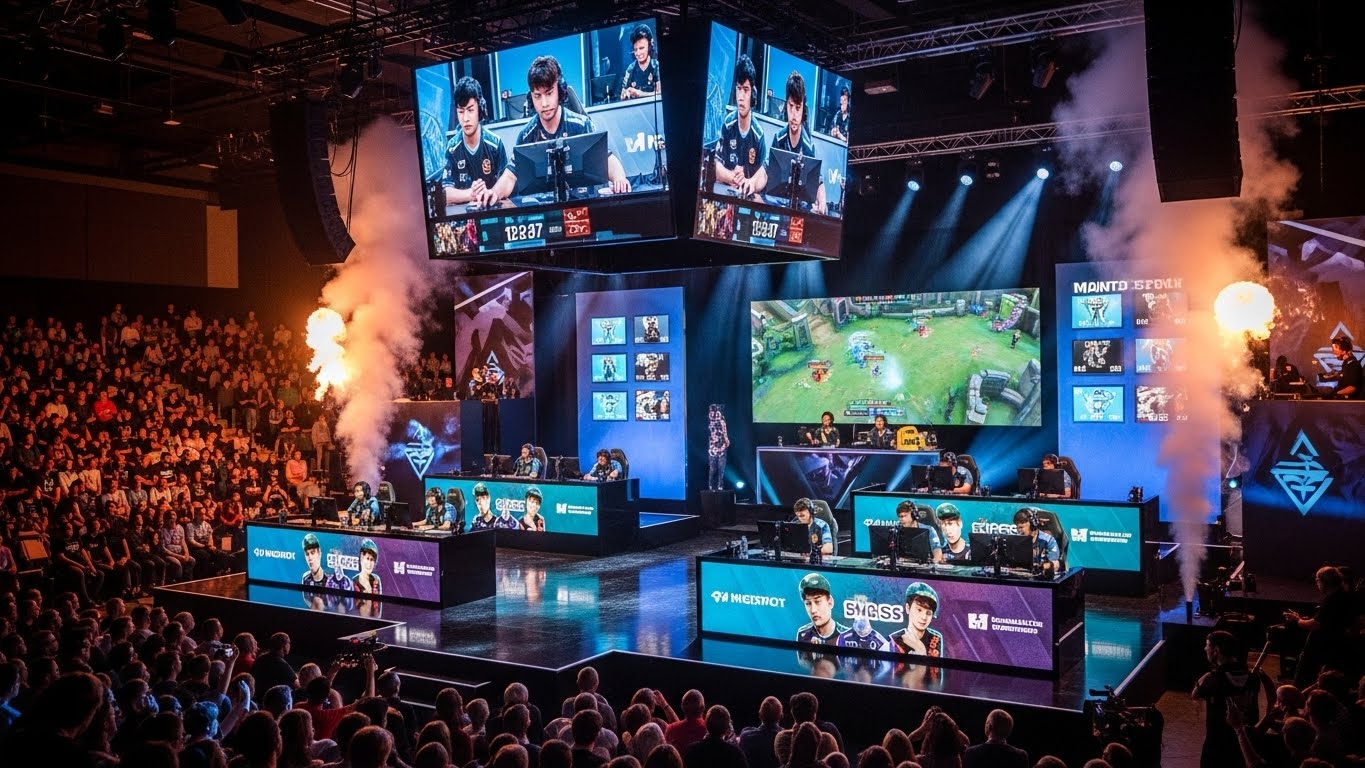
Esports has rapidly emerged as a dominant force within the entertainment industry, reshaping not only how we view competitive gaming but also how we perceive the intersection of digital technology, entertainment, and athletic competition. The meteoric rise of esports is undeniable, as it continues to captivate millions of fans worldwide, create career opportunities, and transform the way we engage with digital media. What once began as a niche pastime for video game enthusiasts has now become a global, multi-billion-dollar industry that rivals traditional sports in viewership, sponsorship, and economic impact. In this blog, we will explore how esports evolved from a small, underground community into a mainstream entertainment juggernaut, the skills it nurtures, the career opportunities it offers, and what the future holds for this exciting form of competition.
The Origins of Esports: From Casual Gaming to Global Competition
Esports did not appear overnight. The roots of competitive gaming trace back to the early days of gaming itself, when players began to challenge each other in games like Pong, Street Fighter, and Pac-Man in arcades across the globe. However, it wasn’t until the advent of the internet and the rise of multiplayer online games that the esports community began to take shape in its current form.
The first major breakthrough came in the late 1990s and early 2000s with games like StarCraft and Quake. These titles introduced competitive multiplayer formats, where players could go head-to-head in real-time, making them the foundation for what would become the esports industry. The concept of tournaments and competitions started gaining traction, and organizations such as the Cyberathlete Professional League and Major League Gaming began organizing high-stakes competitions with cash prizes, sponsorships, and media coverage.
The rapid development of technology—faster internet speeds, more powerful gaming hardware, and improved game design—has only fueled this growth. As broadband internet became more widespread, online gaming grew from a casual hobby to a competitive sport. Players could compete against opponents from all over the world, while fans could watch these competitions online through streaming platforms like Twitch, YouTube, and Facebook Gaming.
The Explosion of Esports: Becoming Mainstream
In the past decade, esports has exploded in popularity, evolving from a niche subculture into a global entertainment phenomenon. What once was an activity reserved for a small group of passionate gamers has now transformed into a mainstream spectacle, with tournaments being broadcast on television and watched by millions of fans across the globe.
A significant milestone in esports’ rise to mainstream recognition came with the launch of games like League of Legends and Dota 2. These games not only introduced innovative gameplay mechanics but also established professional leagues and tournaments that attracted millions of viewers. Major events like the League of Legends World Championship and The International for Dota 2 have become annual spectacles, often filling stadiums with fans and generating viewership numbers comparable to traditional sports events.
In 2018, the League of Legends World Championship drew over 99 million viewers, while The International 2019, the Dota 2 World Championship, offered a prize pool of over $34 million, a number that continues to grow every year. The sheer scale of these tournaments, combined with the massive online followings of esports teams and players, has established esports as an integral part of modern pop culture.
Esports as a Career: Professional Gaming and the Rise of Esports Athletes
One of the most remarkable aspects of esports is the professionalization of gaming as a legitimate career path. Just like athletes in traditional sports, esports players undergo rigorous training, compete in various tournaments, and make a living from sponsorships, prize money, and streaming.
The professionalization of esports has led to the emergence of full-fledged teams, leagues, and organizations. Prominent organizations such as Team Liquid, Fnatic, Cloud9, and T1 are home to some of the most skilled players in the world. These players are often treated like celebrities, with sponsorships from major brands like Intel, Nike, and Red Bull. In fact, the career opportunities within esports extend beyond playing. Many players go on to become coaches, analysts, broadcasters, or content creators. The rise of esports content creators—individuals who stream their gameplay and interact with fans on platforms like Twitch—has created an entirely new career path for those passionate about gaming.
Moreover, esports has given rise to an entirely new industry of esports journalism, marketing, and event management. Tournament organizers, game developers, event hosts, and production teams are crucial to the success of any esports competition. Behind every major tournament, there are thousands of people working to ensure that the event runs smoothly, from commentators and analysts to live stream producers and social media managers.
The Skills Developed Through Esports: More Than Just a Game
One of the most intriguing aspects of esports is the skill set required to succeed in this digital arena. While it may appear as though professional gamers are simply playing games for a living, the reality is far more complex. Competitive gaming requires a unique combination of mental, physical, and emotional skills.
Mental Agility and Decision Making
Esports players must think quickly and make split-second decisions that can determine the outcome of a match. Whether it’s executing a complex maneuver in League of Legends or making tactical decisions in Counter-Strike: Global Offensive, the ability to analyze a situation and respond accordingly is crucial. Players often need to anticipate their opponents’ actions and devise strategies on the fly, which sharpens critical thinking and problem-solving skills.
Teamwork and Communication
Most popular esports titles, such as Overwatch, Dota 2, and Fortnite, require a high level of teamwork. Players must communicate effectively with their teammates, coordinate strategies, and execute complex tactics. The collaborative aspect of esports fosters strong teamwork skills and emphasizes the importance of clear and concise communication, skills that are directly applicable in many professional environments outside of gaming.
Hand-Eye Coordination and Reflexes
Competitive gaming requires a great deal of physical coordination. Professional gamers often train for hours each day to develop their reflexes and hand-eye coordination. In many games, milliseconds can mean the difference between victory and defeat, and players must be able to execute precise movements with speed and accuracy. This physical aspect of gaming is sometimes overlooked but is as crucial as the mental component.
Resilience and Stress Management
Esports players face immense pressure, whether competing in high-stakes tournaments or streaming to thousands of viewers. The ability to handle stress, remain focused under pressure, and bounce back from losses is critical for success in esports. Resilience is a key trait that can also be transferred to many other areas of life, including education, business, and personal relationships.
The Global Impact of Esports: Fostering Community and Cultural Exchange
Esports is more than just a form of competition; it is a global community that transcends borders, languages, and cultures. Gamers from different countries can play together and against one another in real-time, forming friendships, rivalries, and alliances. This interconnectedness fosters a sense of belonging among players and fans alike.
In addition to providing entertainment, esports has become a platform for cultural exchange. Major tournaments often bring together diverse teams from around the world, each representing different cultures, languages, and playing styles. Events like the League of Legends World Championship or The International provide a unique opportunity for fans to experience global competition, witness different gaming cultures, and celebrate the achievements of international players.
Esports also promotes inclusivity and diversity, with growing representation of women, LGBTQ+ individuals, and players from underrepresented backgrounds. Initiatives aimed at fostering a more inclusive environment in esports have gained momentum, creating a space where people from all walks of life can come together to celebrate their love for gaming.
Esports in Education and Career Development
In recent years, esports has started to make its mark on the educational landscape. Many colleges and universities now offer scholarships for students who excel in esports, and some institutions have even established their own competitive teams. In addition to providing students with opportunities to pursue careers in gaming, these programs help develop transferable skills such as leadership, teamwork, and problem-solving.
Esports has also found a place in academic curricula, with universities offering courses in game design, esports management, and digital media production. These programs equip students with the knowledge and skills needed to succeed in the growing esports industry, whether as players, managers, analysts, or content creators.
The Future of Esports: Where Do We Go From Here?
As esports continues to evolve, its future looks brighter than ever. The increasing integration of virtual reality (VR) and augmented reality (AR) could further revolutionize competitive gaming, offering players and fans even more immersive experiences. Additionally, the growth of mobile gaming has made esports more accessible to people around the world, as games like PUBG Mobile and Arena of Valor bring professional-level competition to smartphones.
Esports will also continue to attract investment from traditional sports organizations, with major companies like the NBA, NFL, and NFL already investing in esports teams and partnerships. As esports solidifies its position as a major player in the entertainment world, its reach will continue to expand, offering new opportunities for fans, players, and businesses alike.
Conclusion: Esports is Here to Stay
Esports has undeniably transformed the world of competitive gaming, sports, and entertainment. From its humble beginnings to its current status as a global, multi-billion-dollar industry, esports continues to grow at an exponential rate. Whether you’re a gamer, a fan, or someone who simply enjoys watching competition, esports offers something for everyone.
As technology continues to advance and the community grows, the future of esports is bright. It is no longer just a pastime—it’s a thriving industry,