





Introduction: The Virtual Revolution of Competitive Sports
In the last two decades, the world has witnessed a transformation in the realm of sports and entertainment. What once took place on grassy fields, hardwood courts, or icy rinks now unfolds on screens large and small, where professional gamers engage in lightning-fast battles from behind keyboards and controllers. This evolution is called esports—short for electronic sports—and it is no longer a niche interest but a global phenomenon.
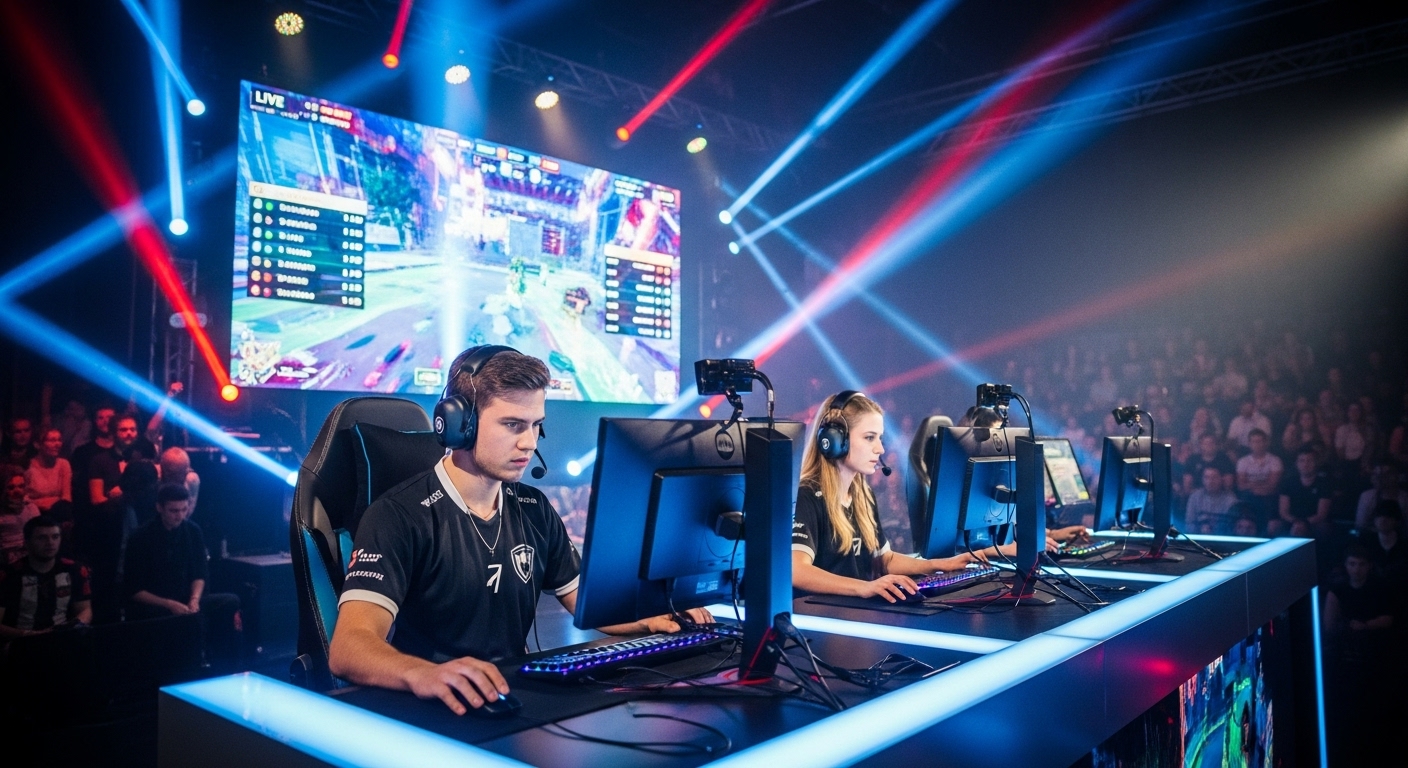
Esports has changed how people define athletes, how fans experience competition, and how technology intersects with entertainment. Today, esports arenas are packed with tens of thousands of fans, while millions more watch online. Players have become celebrities, with followings that rival traditional athletes. This blog will explore the multifaceted world of esports—from its humble beginnings to its high-stakes present, and the exciting future that lies ahead.
The Humble Beginnings of Esports
The origins of esports trace back to the early 1970s, when the first video game tournaments were held in university computer labs. In 1972, Stanford University hosted a competition for the game Spacewar, offering the winner a year’s subscription to Rolling Stone magazine. It may have been modest, but it laid the groundwork for what would eventually evolve into a billion-dollar industry.
In the 1980s and 1990s, arcades became hubs of competitive gaming. Titles like Street Fighter and Mortal Kombat turned local players into neighborhood legends. High scores on arcade machines acted as primitive leaderboards, giving rise to a competitive culture centered around skill, timing, and reflexes. However, it was the home console revolution and the birth of online gaming in the late 1990s that truly unlocked esports’ potential.
Games like StarCraft, Quake, and Counter-Strike gained massive followings. South Korea became a central hub for early esports, with televised StarCraft matches drawing millions of viewers. Internet cafes, known as PC bangs, spread across Asia, nurturing young talent and giving rise to the first generation of professional players.
The Rise of Professionalism and Global Recognition
The 2000s were a pivotal decade for esports. With the development of online multiplayer infrastructure, competitive scenes emerged around games like Dota, Warcraft III, and Halo. These games introduced rankings, ladders, and official tournaments that offered increasing cash prizes. Organizations such as Major League Gaming and Electronic Sports League began hosting tournaments with structured formats and sponsorship deals.
By the 2010s, esports had gone fully global. The emergence of streaming platforms allowed fans to watch matches live from anywhere in the world. Twitch, YouTube, and other platforms brought the viewing experience to millions, providing not only professional matches but also daily content from players and teams. This allowed esports personalities to build dedicated fanbases and brands of their own.
Major publishers began investing in esports infrastructure. Riot Games launched the League of Legends Championship Series, Blizzard introduced the Overwatch League, and Valve’s Dota 2 International became a multi-million-dollar spectacle. Traditional sports teams, media companies, and investment firms entered the scene, legitimizing esports in the eyes of the public and opening new revenue streams.
The Ecosystem of Esports
The esports industry functions through a complex ecosystem involving game developers, teams, players, sponsors, event organizers, and fans. Each plays a crucial role in sustaining the competitive environment.
Game Developers and Publishers
At the core of esports lies the games themselves. Publishers like Riot Games, Valve, Activision Blizzard, and Epic Games control the competitive integrity, balancing, and tournament rights of their respective titles. Their investment in esports is both a business and community-building decision. Through tournaments and professional leagues, they keep games relevant and increase player engagement.
Professional Teams and Players
Esports teams operate similarly to traditional sports clubs. They sign professional players under contracts, manage training schedules, hire coaches and analysts, and build brand identities. Teams such as T1, Team Liquid, FaZe Clan, and G2 Esports have become household names among fans. Players are scouted from amateur leagues or through online leaderboards, sometimes as young as sixteen.
Players train rigorously, often spending eight to twelve hours a day scrimming (practicing against other teams), reviewing gameplay footage, and strategizing. The pressure to perform at the highest level is intense, and careers can be short-lived without proper management of mental and physical health.
Tournaments and Events
Tournaments are the main stage for esports competition. Some are independently hosted by third-party organizers, while others are officially sanctioned leagues. Tournament formats vary—single elimination, double elimination, best-of series—but all share a common goal: to crown champions and award prize money.
Events like The International, the League of Legends World Championship, and the Call of Duty League Finals draw massive audiences. In-person attendance at these events can rival that of traditional sports games, while online viewership can reach into the tens of millions.
Sponsorship and Revenue Models
The financial engine of esports is driven by sponsorships, media rights, advertising, merchandising, and prize pools. Brands like Red Bull, Intel, BMW, and even Louis Vuitton have invested heavily in esports sponsorship. These brands recognize the massive, engaged, and youthful audience that esports commands.
Teams also make money through merchandise sales, content creation, and partnership deals. Some leagues share revenue with teams, while others operate on a franchise model where organizations buy a permanent slot in the league.
The Psychology of Esports Athletes
Behind every great esports performance lies intense preparation and mental fortitude. Unlike traditional athletes who rely on physical strength and endurance, esports athletes must master reflexes, memory, communication, and decision-making.
The average professional player competes in high-stress situations where milliseconds can determine the outcome of a match. Reaction times, hand-eye coordination, and strategic foresight are tested in every game. Mental fatigue and burnout are common challenges. As a result, more teams are investing in sports psychologists, nutritionists, and lifestyle coaches.
The average career span of an esports pro is short, often between three to seven years. After retiring, many move into coaching, content creation, or management roles within the industry. As esports continues to professionalize, so too does the support structure surrounding its athletes.
Cultural Impact and Community
Esports is more than competition; it is a culture, a lifestyle, and a global movement. The community aspect of gaming has always been strong, and esports elevates that to new heights. Online forums, Discord servers, Reddit threads, and social media pages buzz with discussion, memes, and analysis.
Fans form deep emotional connections to teams and players. Chants, fan art, cosplay, and creative content are part of every major event. Unlike traditional sports, where the barrier between athlete and fan is high, esports allows for more direct interaction through live streams and social media engagement.
Gaming has also become a form of identity for many. Esports fans are often gamers themselves, making the connection more personal and participatory. This participatory culture is one of the reasons esports continues to grow.
Educational and Career Opportunities
With esports’ growth comes opportunity—not just for players, but for a wide range of professionals. From event organizers and shoutcasters to software engineers and marketing specialists, the industry offers a multitude of careers. Colleges and universities around the world have started offering esports programs, scholarships, and degrees in game design, digital media, and esports management.
Schools now field varsity esports teams, compete in intercollegiate tournaments, and host their own leagues. These programs provide a structured environment where students can pursue their passion while gaining valuable education and skills.
Moreover, esports is encouraging STEM learning. Games like Minecraft and Roblox have been used in classrooms to teach coding and design, while competitive games promote critical thinking and communication.
Challenges Facing Esports
Despite its rapid ascent, esports is not without challenges. Its digital nature makes it prone to unique problems, including server issues, cheating, and toxic behavior in online communities. Maintaining competitive integrity is a constant concern.
Another challenge is player well-being. The demands of practice, travel, and public scrutiny can take a toll on mental and physical health. Organizations must find ways to support athletes while maintaining competitive performance.
Additionally, the industry faces concerns about sustainability. Many teams rely heavily on investor capital and may struggle to turn profits in the short term. Franchising models have drawn criticism for high entry costs, and some fans worry about the over-commercialization of the scene.
Gender disparity is also a significant issue. While gaming is enjoyed by people of all genders, professional scenes are overwhelmingly male-dominated. More inclusive initiatives are needed to ensure equal opportunities and representation across all levels of esports.
The Future of Esports
Looking ahead, the future of esports appears bright but complex. Technological advancements such as virtual reality, augmented reality, and artificial intelligence could reshape the way we play and watch games. The metaverse and cross-platform ecosystems may allow fans to participate in virtual arenas and digital fan zones in ways never seen before.
Esports is also beginning to gain more recognition from international institutions. Discussions have been underway about including esports in multi-sport events like the Olympics and the Asian Games. Such moves would further validate esports as a legitimate athletic pursuit.
More collaboration between traditional sports and esports is also likely. Many traditional athletes and organizations are investing in esports teams or forming their own. These crossovers can introduce esports to new audiences and bridge the gap between digital and physical competition.
As the generation raised on games becomes the dominant cultural and economic force, esports is positioned to be a central pillar of global entertainment.