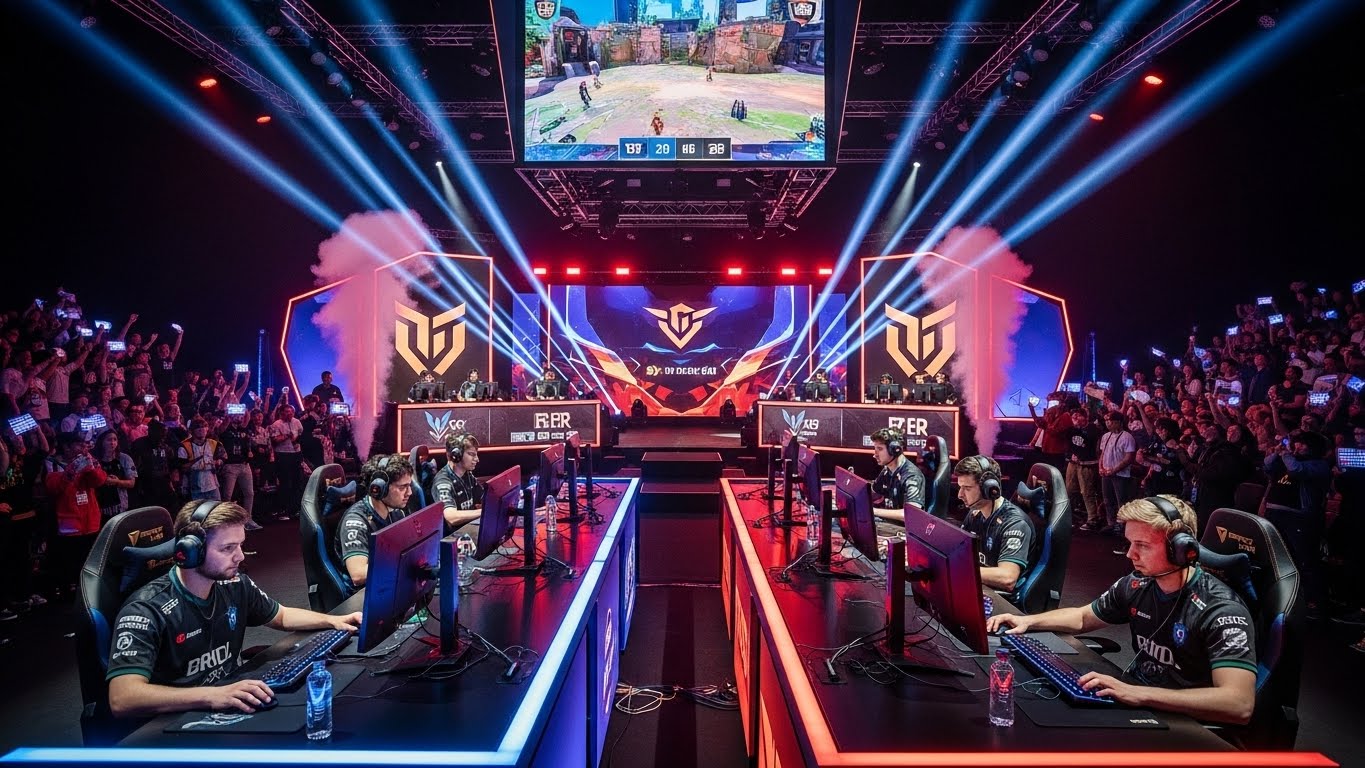





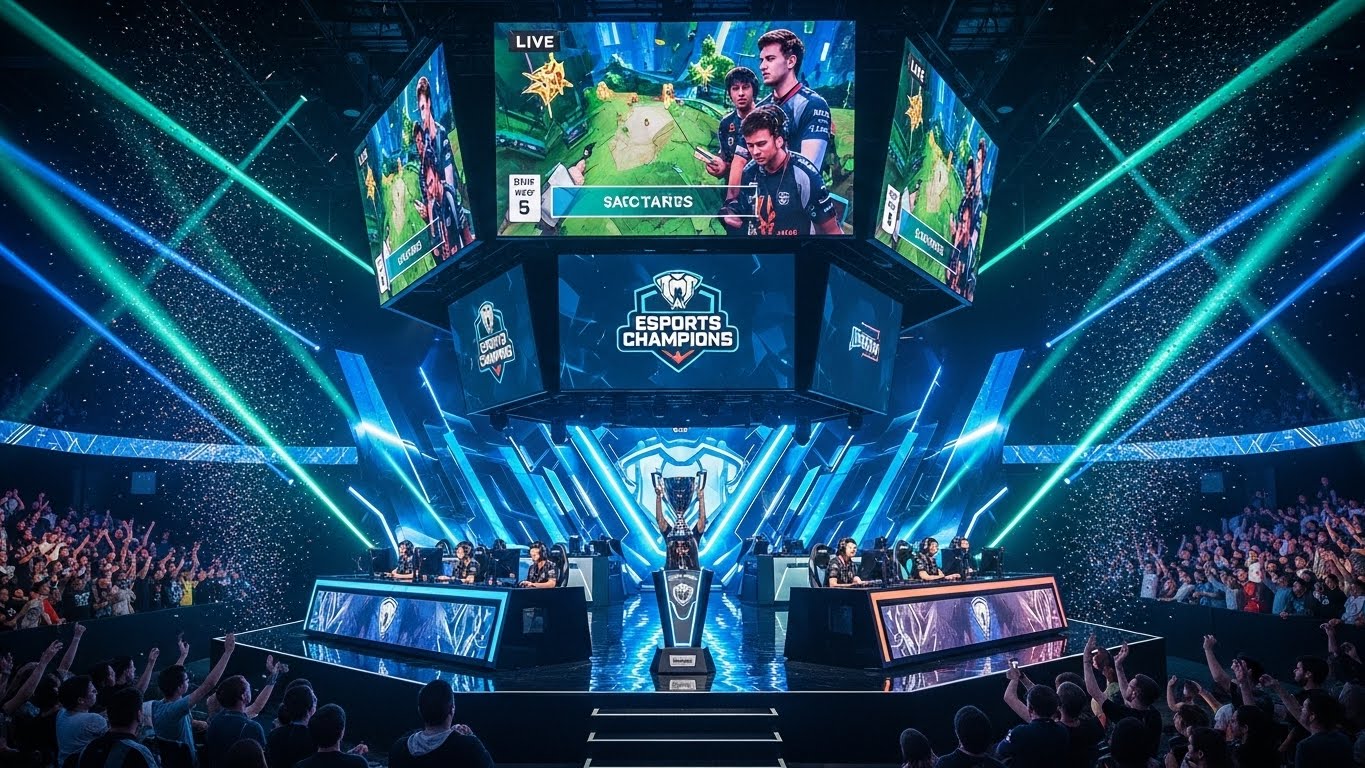
Esports, short for electronic sports, has rapidly transformed from a niche hobby into a global phenomenon. What once began as a small community of gamers competing in local tournaments has exploded into a multi-billion-dollar industry with millions of fans, professional players, and sponsors. From the captivating action of a League of Legends match to the strategic precision of Counter-Strike: Global Offensive, esports has earned its place in mainstream entertainment. In this blog, we will dive into the growing influence of esports, its evolution, and its impact on both the gaming community and the entertainment industry at large.
The Evolution of Esports: From Hobby to Global Industry
Esports traces its roots back to the late 20th century, when competitive gaming was largely an informal activity. Early competitions, like the 1997 Red Annihilation Tournament for Quake, were held in small venues and attracted a limited audience. However, these competitions laid the groundwork for a new era of gaming, one in which players could compete at a professional level for significant prizes.
The turning point for esports came with the advent of high-speed internet and the rise of popular multiplayer games. Titles like StarCraft and Warcraft III ushered in a new era of online competitive gaming. The release of League of Legends in 2009 marked the beginning of a new wave of competitive gaming that would go on to define the modern esports scene. Riot Games, the developer behind League of Legends, spearheaded the professionalization of esports with the creation of structured leagues, regular tournaments, and lucrative sponsorship deals.
The Esports Ecosystem: More Than Just Gaming
At its core, esports is about much more than just playing games. It has developed into a complex ecosystem that encompasses a variety of stakeholders, each playing a crucial role in shaping the industry.
Players: The Heroes of the Digital Arena
The heart of esports is undoubtedly its players. These talented individuals dedicate countless hours to perfecting their skills and competing at the highest level. Esports players are not simply casual gamers—they are professional athletes, often with coaches, analysts, and nutritionists guiding them in their quest for victory. Much like traditional athletes, esports competitors train rigorously, practicing strategies, refining their reflexes, and studying their opponents to gain an edge.
The professionalization of esports has made it possible for players to earn substantial incomes. In addition to tournament winnings, top players often have lucrative sponsorships, streaming deals, and merchandise sales. Popular players like Faker (Lee Sang-hyeok) from League of Legends or s1mple (Oleksandr Kostyliev) from Counter-Strike: Global Offensive have become household names, and their success stories inspire the next generation of gamers to pursue esports as a viable career.
Teams: The Powerhouses Behind Success
While individual skill is important, esports is often a team effort. Professional esports teams are organizations that bring together a group of talented players, coaches, analysts, and support staff. These teams provide the structure and resources necessary for players to reach their full potential. Teams like Team Liquid, Cloud9, and Fnatic have become synonymous with success in the esports world, winning major tournaments and earning significant prize money.
These organizations also act as brands in their own right, with dedicated fanbases, merchandising, and sponsorships. A team’s success is often a reflection of its ability to manage its roster and operations effectively. The dynamics between players, coaches, and management are crucial for maintaining consistency and achieving long-term success.
Tournaments: The Heart of Esports Competition
Tournaments are the lifeblood of the esports scene, bringing together the best teams and players from around the world to compete for glory and a share of the prize pool. These events range from small local competitions to massive international tournaments. Games like Dota 2, Counter-Strike, and Fortnite each have their own flagship tournaments that attract millions of viewers.
One of the most iconic events in esports is The International, the annual Dota 2 tournament organized by Valve. The event regularly features prize pools in the tens of millions of dollars, with teams from across the globe battling for supremacy. Similarly, the League of Legends World Championship is one of the most-watched events in the world, drawing in millions of viewers and filling stadiums with excited fans.
These tournaments are not just about the games themselves; they are grand spectacles that combine high-level competition with entertainment, music, and commentary. The production values are on par with traditional sports broadcasts, with live streams, expert analysis, and immersive fan experiences elevating the excitement.
Fans: The Lifeblood of Esports
One of the driving forces behind the success of esports is its passionate fanbase. Unlike traditional sports, esports fans don’t always have to attend games in person to be part of the action. Thanks to platforms like Twitch, YouTube, and Facebook Gaming, fans can watch live streams of matches, interact with players and commentators, and become part of a global community.
The social aspect of esports is a key part of its appeal. Fans are often deeply invested in the success of their favorite teams and players, forming tight-knit communities online. These communities provide a sense of belonging and identity for fans, who can share their passion for gaming, exchange strategies, and celebrate victories together. In many ways, esports has created a global village for gamers.
The Impact of Esports on Traditional Sports and Entertainment
Esports has not only disrupted the gaming industry but has also made a significant impact on traditional sports and entertainment. As esports continues to grow in popularity, it is increasingly viewed as a legitimate form of competition, with some even arguing that it should be included in the Olympics.
Esports and Traditional Sports
The relationship between esports and traditional sports is becoming more intertwined. In recent years, we’ve seen a growing number of traditional sports organizations invest in esports. The NBA, for instance, launched the NBA 2K League, which allows professional players to compete in the popular NBA 2K video game. Similarly, European football clubs like Manchester City and Paris Saint-Germain have established esports divisions, recruiting professional gamers to represent their teams in games like FIFA and League of Legends.
This cross-pollination between esports and traditional sports helps bring credibility and visibility to esports while also offering a new form of entertainment to fans of traditional sports. The combination of physical and digital sports could be the future of fan engagement.
The Entertainment Industry’s Response to Esports
The entertainment industry has also taken notice of the esports boom. Esports is no longer confined to the gaming community—it has become a mainstream form of entertainment. Streaming platforms like Twitch and YouTube Gaming have exploded in popularity, and esports events are regularly featured on major television networks. Esports tournaments are even being broadcast on channels like ESPN, a symbol of the growing respect esports commands as a legitimate form of entertainment.
Furthermore, esports has inspired a new generation of content creators, influencers, and streamers. Many of the most successful esports personalities have expanded their influence beyond competitive gaming, creating content for their fans and becoming celebrities in their own right.
The Future of Esports: What Lies Ahead?
The future of esports looks incredibly bright. The industry continues to evolve, and its global appeal is only increasing. As technology advances and more people gain access to high-speed internet and gaming consoles, the esports scene is poised to expand even further.
Increased Investment and Sponsorships
As esports continues to attract more mainstream attention, it is likely that we will see even greater investment from big-name companies and brands. Sponsorships, advertising, and broadcasting rights will become increasingly valuable, with more businesses seeking to tap into the lucrative esports market. This could lead to more job opportunities, higher salaries for players, and better overall infrastructure for the industry.
Esports as a Career Path
Esports is becoming a viable career path for many individuals. As the industry matures, we may see formal education programs and training institutions dedicated to esports. Players, coaches, analysts, and even event organizers will have more opportunities to develop their skills and pursue long-term careers in esports.
The Role of Virtual Reality and Augmented Reality
Virtual reality (VR) and augmented reality (AR) technologies could also play a major role in shaping the future of esports. As these technologies continue to improve, they could create entirely new ways of experiencing competitive gaming, from immersive first-person experiences to new forms of spectator interaction.
Conclusion
Esports has evolved into one of the most exciting and dynamic industries in the world. From humble beginnings as a small community of gamers to a multi-billion-dollar global industry, esports has changed the way we view competitive gaming and entertainment. As the industry continues to grow, its influence will only increase, creating new opportunities for players, teams, fans, and investors alike. Whether you’re a casual gamer or a die-hard esports fan, one thing is certain: esports is here to stay, and its future is incredibly bright.